ROOTING
Exploring with the snout
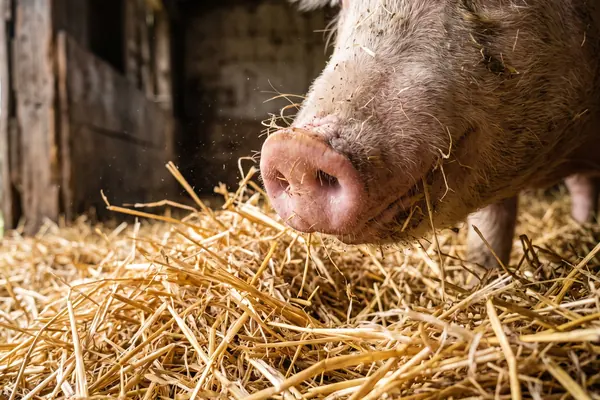
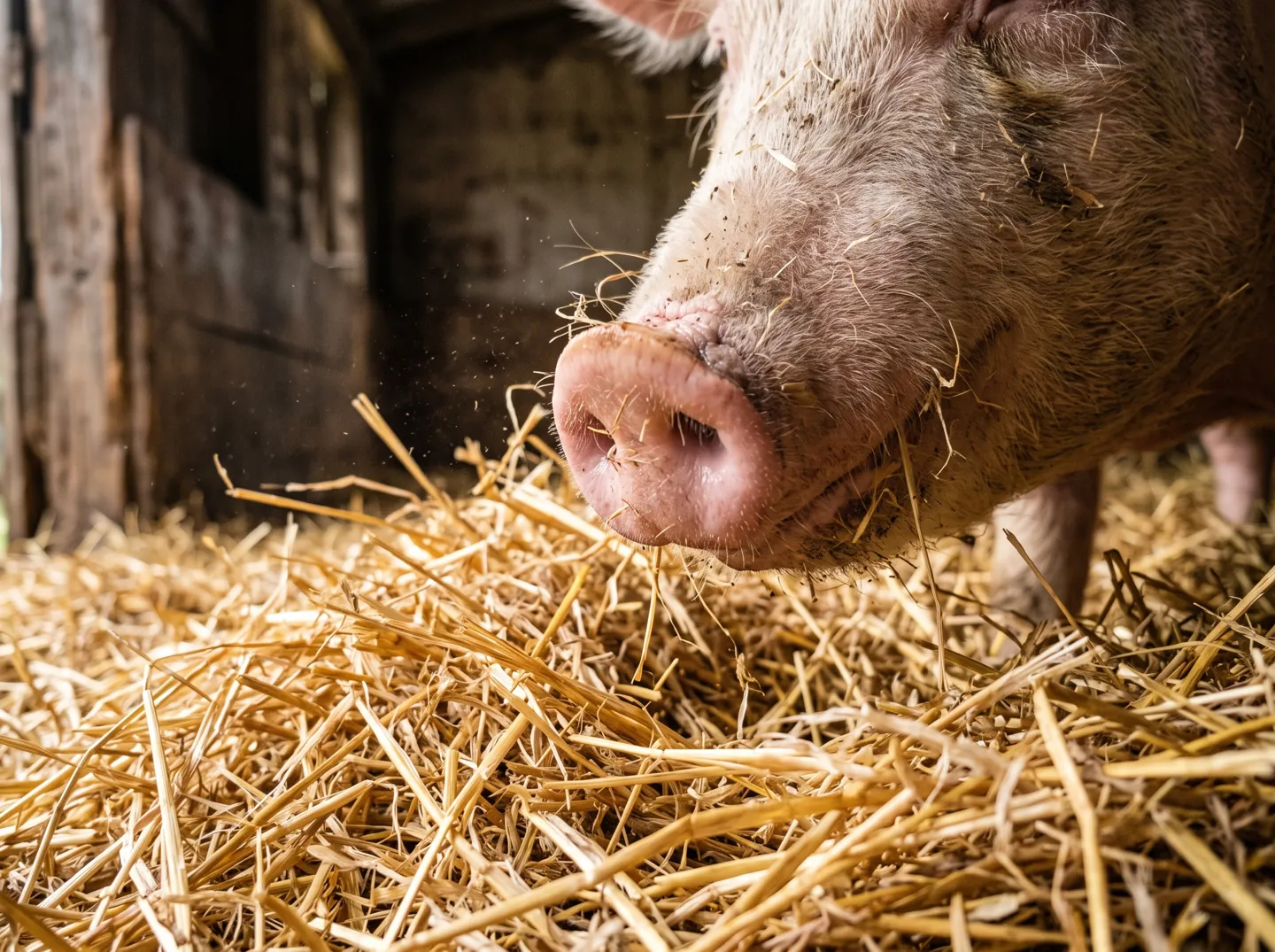
The law in England says all pigs must have permanent access to material such as straw, hay or wood that lets them investigate and manipulate it.
See the behavioursAN INDEPENDENT ANIMAL GUIDE
Pigs are inquisitive, social animals.
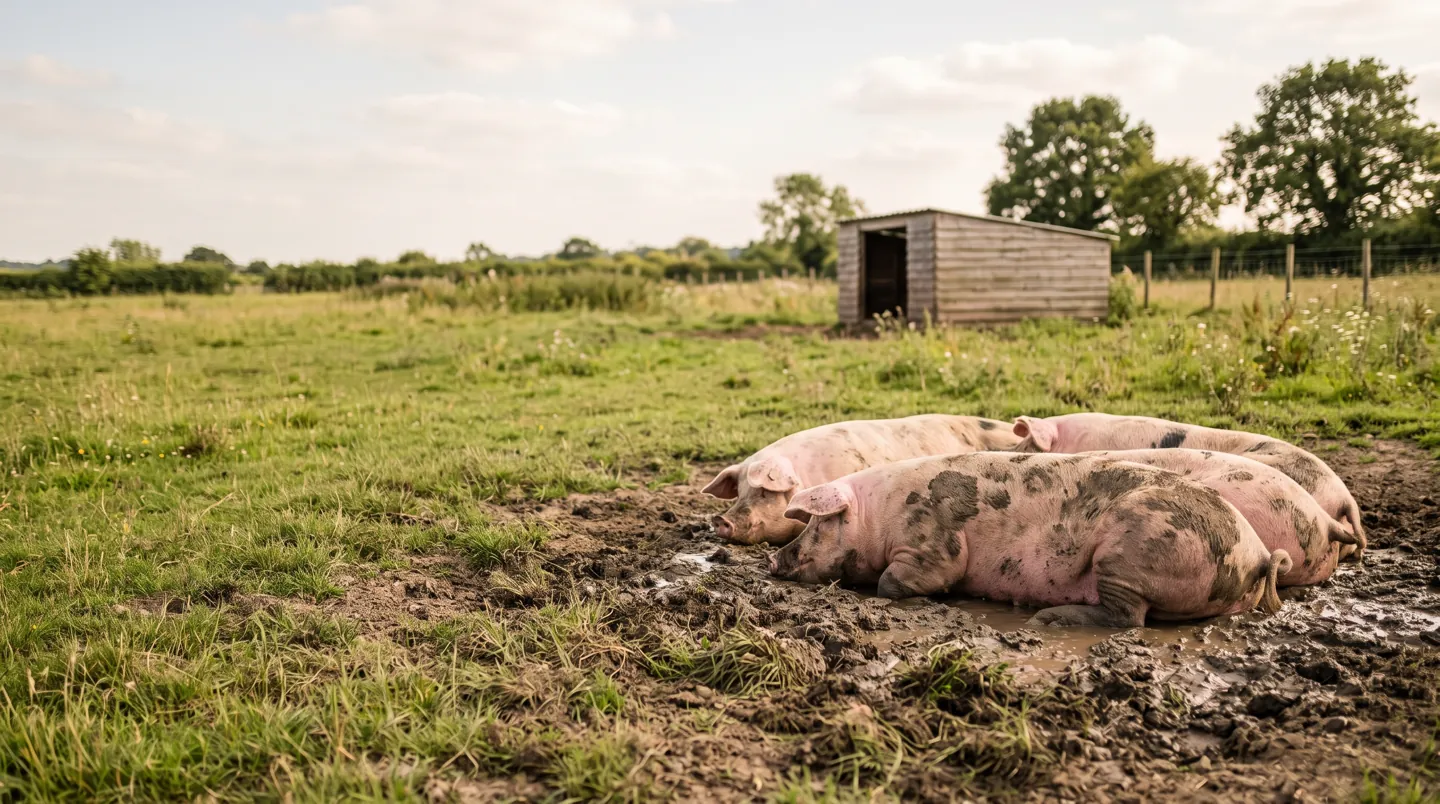
That is how England's welfare code for pigs puts it. They are driven to explore with their snouts, they cool off in mud because they barely sweat, and a sow about to give birth will try to build a nest.
ROOT, WALLOW, NEST behaviours pigs are driven to
THE SHORT ANSWER
Much of what pigs do makes sense once you know two things:
they forage with their noses, and they cannot sweat to cool down.
ROOTING
The law in England says all pigs must have permanent access to material such as straw, hay or wood that lets them investigate and manipulate it.
See the behavioursWALLOWING
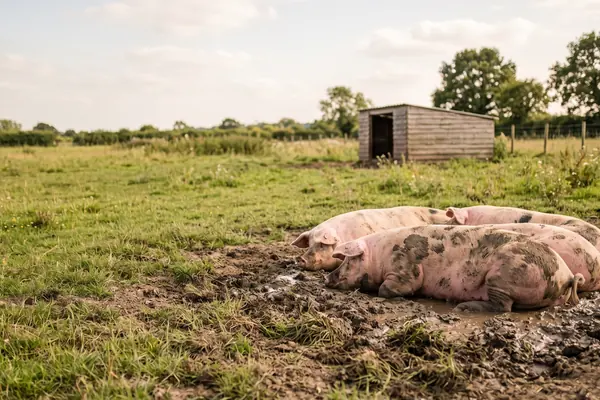
A Wageningen review found most evidence points to cooling: pigs lack functional sweat glands, so wallowing helps them avoid overheating.
See the numbersHUDDLING
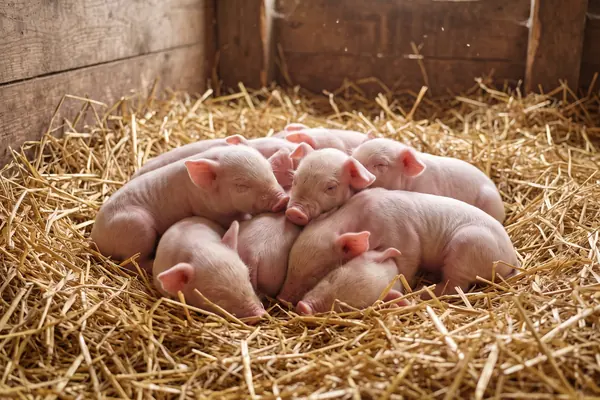
Newborn piglets have only small fat reserves to make heat. A 2022 review says huddling is their main way to stop heat loss, taking up most of their time.
Nests and littersFOUR BEHAVIOURS
Pick a behaviour to see why pigs do it and what England's welfare code says about it. The bar shows how firmly the code ties it to something keepers must provide.
Based on Defra's Code of practice for the welfare of pigs (England) and the Wageningen review of wallowing. This is general information, not veterinary advice.
TWO NUMBERS WORTH KNOWING
One figure on why older pigs overheat,
one on how newborns stay warm.
≈ 30 per cm²
Functional sweat glands in older pigs
A 2022 review says grown pigs are susceptible to heat stress because they have few functional sweat glands, and that wallowing is their first reaction to heat.
SWEAT GLANDS · FRONTIERS IN VETERINARY SCIENCE
61–74%
Share of time newborn piglets spend huddling
The same review cites figures of around 61.2 to 73.8 percent: huddling is the newborns' primary way to prevent heat loss.
HUDDLING · FRONTIERS IN VETERINARY SCIENCE
A 2010 Wageningen review of 48 papers on wallowing in pigs and wild boar found it serves mainly for cooling, sunburn protection and removing parasites, and possibly for scent-marking.
WHAT THE CODE EXPECTS
These summarise points from Defra's welfare code for pigs in England. They describe what the code asks of keepers; anyone keeping pigs should read the code itself.
Straw, hay, wood or similar, available all the time and topped up so it keeps the pigs' interest.
Shade and wallows outdoors; in warm weather options such as misting, showers or floor cooling.
Suitable nesting material in the week before a sow gives birth, especially in the last 24 hours.
Expect some fighting while a new ranking order forms, and separate pigs promptly if aggression becomes severe.
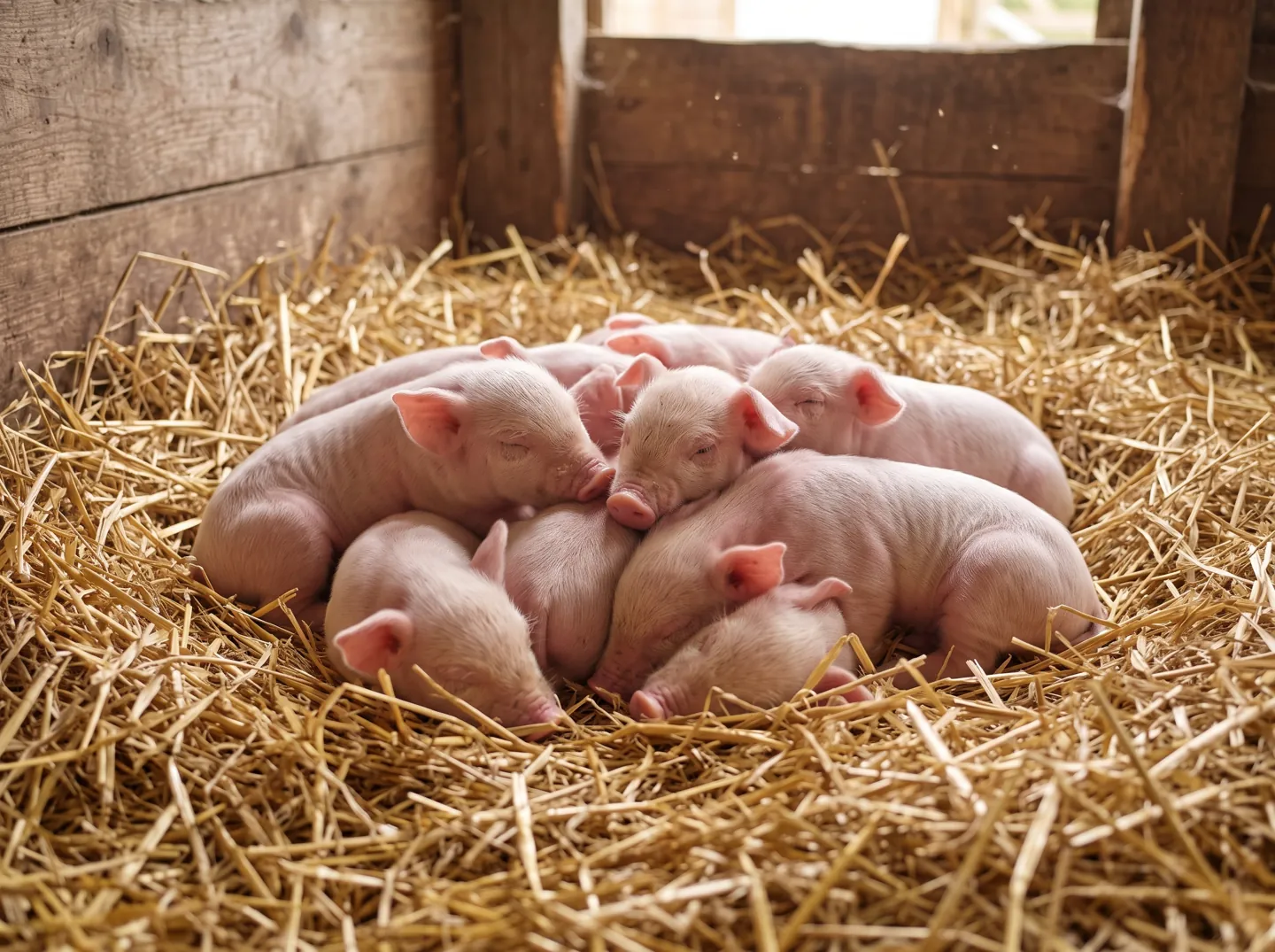
NESTS AND LITTERS
The code says nesting material should be provided especially in the 24 hours before farrowing, to satisfy the sow's need to build a nest and minimise stress. In free farrowing systems she should have room to nest build, turn around, rise and lie down.
Piglets need warmth from the start. The code requires a solid, matted or littered floor area large enough for the litter to rest together, and the 2022 review notes that newborns have only small fat deposits to make heat.
Questions
Mainly to keep cool. A Wageningen review says pigs lack functional sweat glands, so wallowing helps prevent overheating, and also protects against sunburn and helps remove parasites.
Hardly. A 2022 review in Frontiers in Veterinary Science says older pigs have few functional sweat glands, around 30 per square centimetre, which makes them vulnerable to heat stress.
Exploring and foraging with the snout is a natural, highly motivated behaviour. England's welfare code says pigs must always have material such as straw or hay to investigate and manipulate.
The code says ringing is a mutilation that should be avoided wherever possible because it interferes with natural rooting, and should only be done by a trained, competent person where necessary.
Yes. The code calls them inquisitive, social animals. Mixing groups changes the hierarchy and leads to some fighting to set a new ranking order.
Sources
ABOUT THIS NAME
doodlebabe.com is part of the DoodleSale portfolio. It isn't in an auction right now, but you can ask about leasing it.